
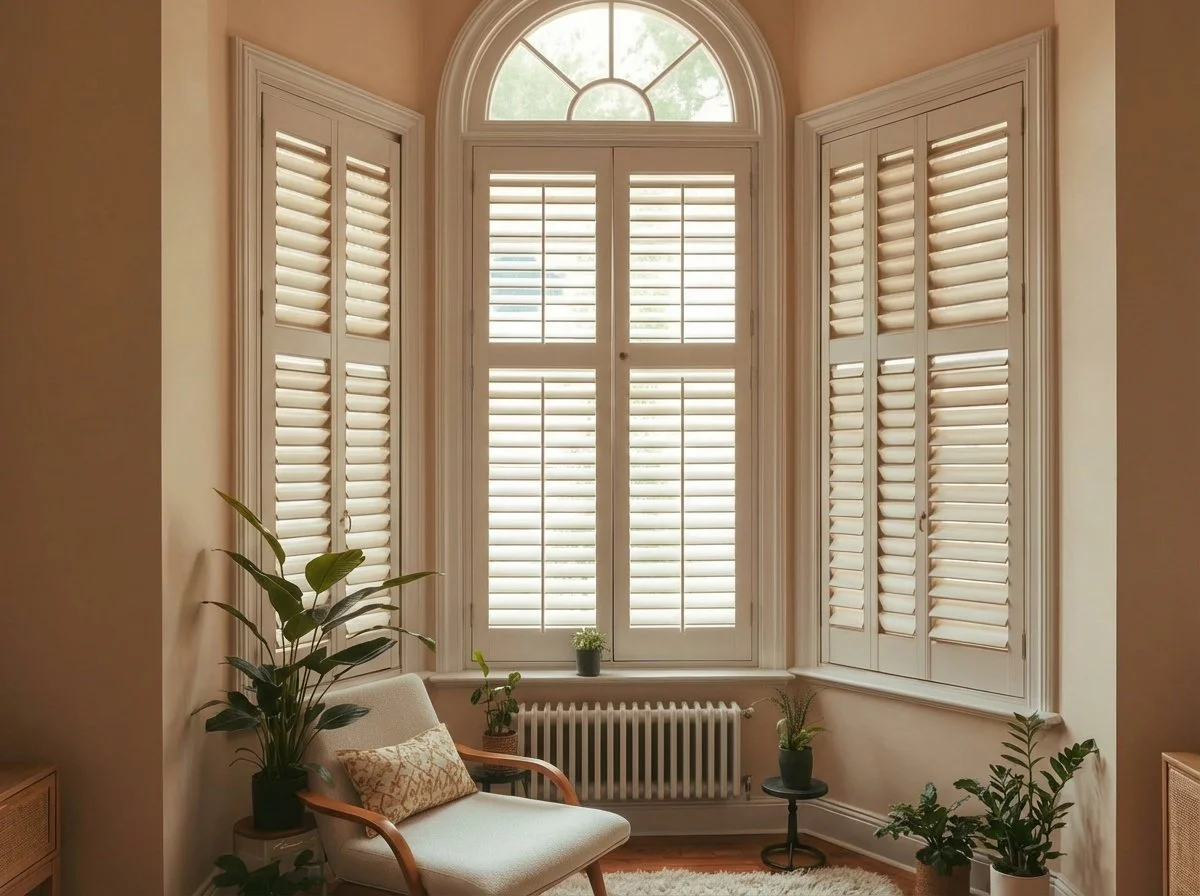
Shutters are one of the most debated window treatment decisions. Real wood or composite? The choice affects everything from initial cost to long-term maintenance to the look and feel of your home.
This comparison will help you understand what each offers so you can make the right choice for your space.
Real Wood Shutters
Real wood shutters are classic. They have warmth and character that people immediately notice. When you run your hand over quality wood shutters, you feel the craftsmanship.
Wood shutters are typically made from hardwoods like basswood or poplar, chosen for stability and workability. They take stain and paint beautifully and develop a patina over time that many homeowners love.
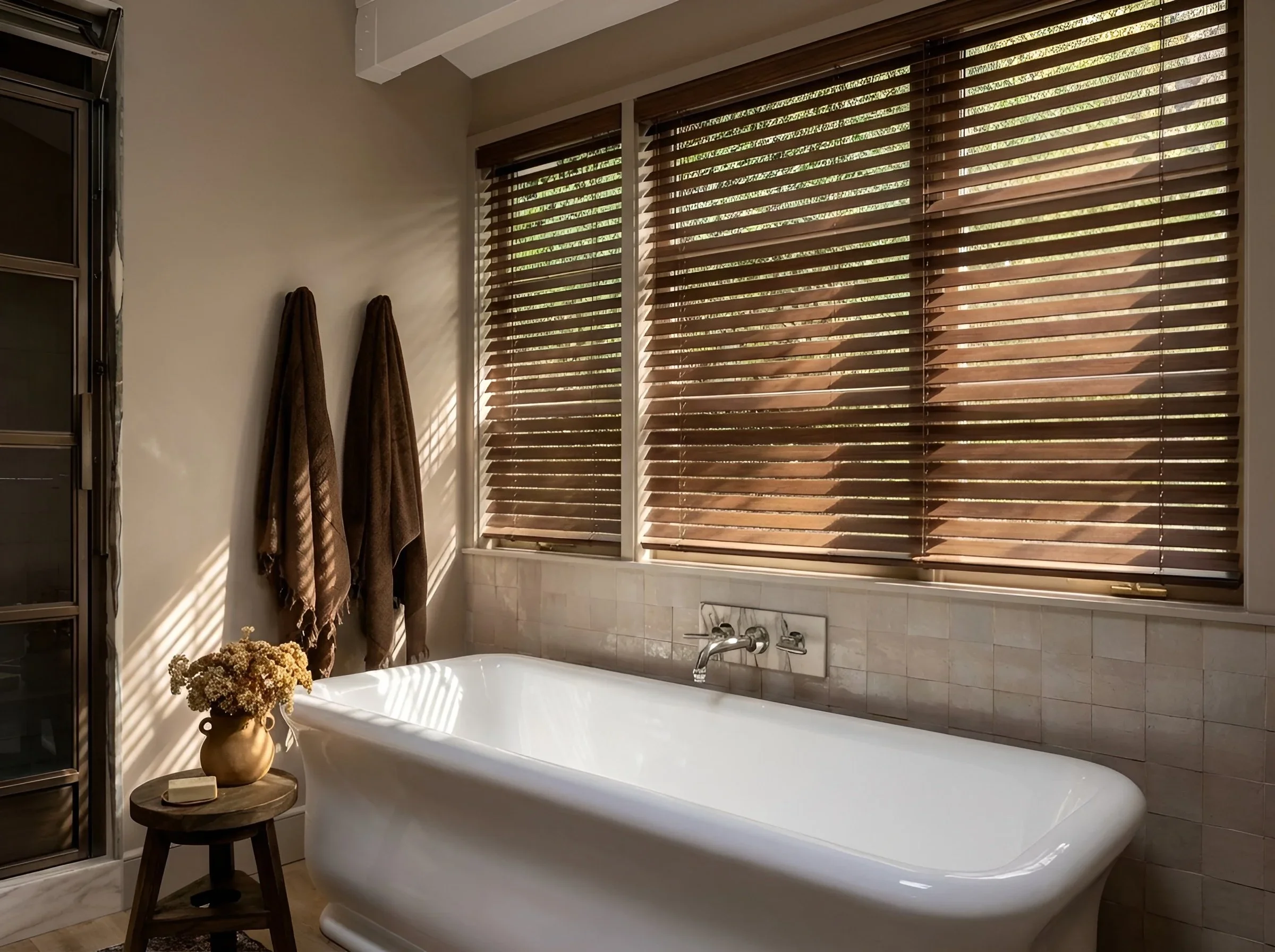
Advantages of Real Wood:
The aesthetic is undeniable. Real wood has depth and richness that feels expensive and intentional. In wine country homes especially, wood shutters complement rustic elegance and traditional design beautifully.
Customization is straightforward. Wood is easy to paint or stain in any color you want. If your design direction changes years later, you can refinish them.
Durability, when maintained, is excellent. Quality wood shutters last 20, 30, even 50 years with proper care. Wood is a forgiving material that can handle the occasional ding or mark.
Repairability is easy. If a slat cracks or a hinge needs adjustment, a professional can fix it. You are not replacing the whole shutter because of a small issue.
Disadvantages of Real Wood:
Maintenance is real. Wood needs regular care. In wine country's fluctuating humidity and temperature, wood can expand and contract. You need to monitor for warping or swelling, especially in bathrooms or kitchens with moisture.
Humidity sensitivity is the biggest challenge. In damp environments like bathrooms near windows or kitchens with significant moisture, wood can swell or warp. Coastal humidity also affects wood more than most people anticipate.
Cost is higher upfront. Quality real wood shutters are a significant investment. A set of plantation shutters for multiple windows can easily run $3,000 to $8,000 or more depending on size and customization.
Paint or stain maintenance happens every few years. If you want them to look fresh, you are refinishing or repainting periodically.
Composite Shutters
Composite shutters are made from engineered materials, usually a blend of wood fiber and polymer. They are designed to look like real wood while eliminating the maintenance headaches.
Advantages of Composite:
Moisture resistance is the biggest win. Composite does not swell, warp, or rot in humid environments. If you have bathrooms with lots of moisture or kitchens with steam, composite is the practical choice.
Durability in varied climates is exceptional. Unlike wood, composite handles temperature swings, humidity changes, and coastal salt air without damage. Wine country's temperature fluctuations do not affect composite the way they affect real wood.
Lower maintenance is genuine. Composite shutters need occasional dusting or wiping. That is it. No refinishing, no repainting, no worrying about humidity damage.
Cost is typically lower than real wood. Quality composite shutters run $1,500 to $5,000 depending on size, which is usually 30 to 50 percent less than comparable wood.
Appearance has improved significantly. Modern composite shutters look remarkably like real wood. The wood grain texture and color options are convincing. Most people cannot tell the difference from a few feet away.

Disadvantages of Composite:
Aesthetic purists notice the difference. If you are looking closely or touching them, composite does not have the same depth and warmth as real wood. The texture is slightly more uniform, the finish slightly more manufactured.
Limited customization compared to wood. While composite comes in various colors and styles, you cannot refinish it like real wood. The color you choose is what you get.
Long-term durability questions. Real wood has proven track records over centuries. Composite has been mainstream for maybe 20 to 30 years, so the very-long-term performance is less documented. Most manufacturers offer 10 to 15 year warranties.
Cost of replacement is higher than repair. If a composite shutter becomes damaged, repair is often not practical. You replace the shutter rather than fix it.
Environmental considerations. Composite is engineered material, not a natural product. Some people have concerns about the manufacturing process and end-of-life disposal.
Side-by-Side Comparison
Here is a quick decision matrix:
Choose real wood if:
- You love the aesthetic of natural wood and do not mind the maintenance
- Your environment is dry (wine country homes away from moisture sources)
- You want long-term durability and repairability
- Your design leans traditional or rustic
- You are willing to refinish or repaint periodically
Choose composite if:
- Moisture resistance matters (bathrooms, kitchens, coastal areas)
- You want minimal maintenance
- Budget is a concern
- You want wood aesthetic without the upkeep
- You value durability in temperature-fluctuating climates
Wine Country Considerations
Sonoma, Napa, and Marin have specific conditions worth considering.
If you are in a dry foothills location with stable humidity, real wood shutters are a great choice. They age beautifully and fit the wine country aesthetic.
If you are near the coast or in areas with higher humidity, composite handles the conditions better than wood.
Temperature swings in wine country (hot days, cool nights) affect wood shutters. It is not a dealbreaker, but it is something to monitor.
Installation and Professional Guidance
Whether you choose wood or composite, professional installation matters. Properly installed shutters are level, operate smoothly, and stay that way. Poor installation causes issues with either material.
At LC Window Treatments, we install both real wood and composite plantation shutters. We measure precisely, account for your local climate conditions, and install with attention to detail.
We can help you think through which makes more sense for your specific rooms and your maintenance tolerance. Some customers choose wood for formal living areas and composite for bathrooms and kitchens. Others commit fully to one or the other based on their priorities.
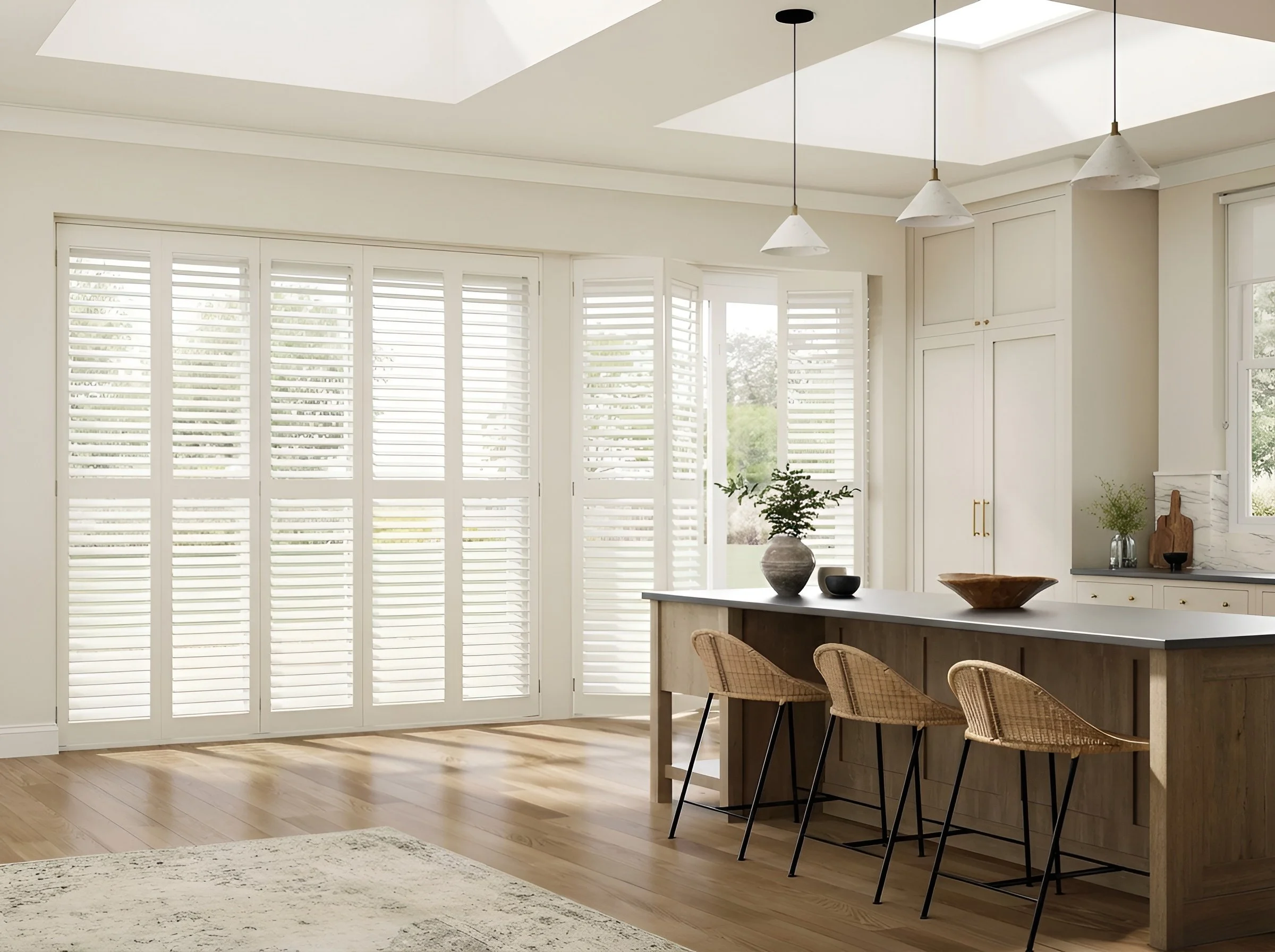
The Bottom Line
Both real wood and composite shutters are quality choices. The decision comes down to priorities.
Real wood offers unmatched aesthetic beauty and long-term durability if you are willing to maintain it. Composite offers practical low-maintenance performance and better moisture resistance.
Neither is inherently right or wrong. They serve different needs and preferences. Many wine country homes use both, choosing based on the specific room and its requirements.
Schedule a complimentary design consultation with our team.
We'll review your home, talk through how you use each room, and recommend solutions tailored to your lifestyle and budget