
Blackout vs. Light Filtering Shades: Which is Right for You?
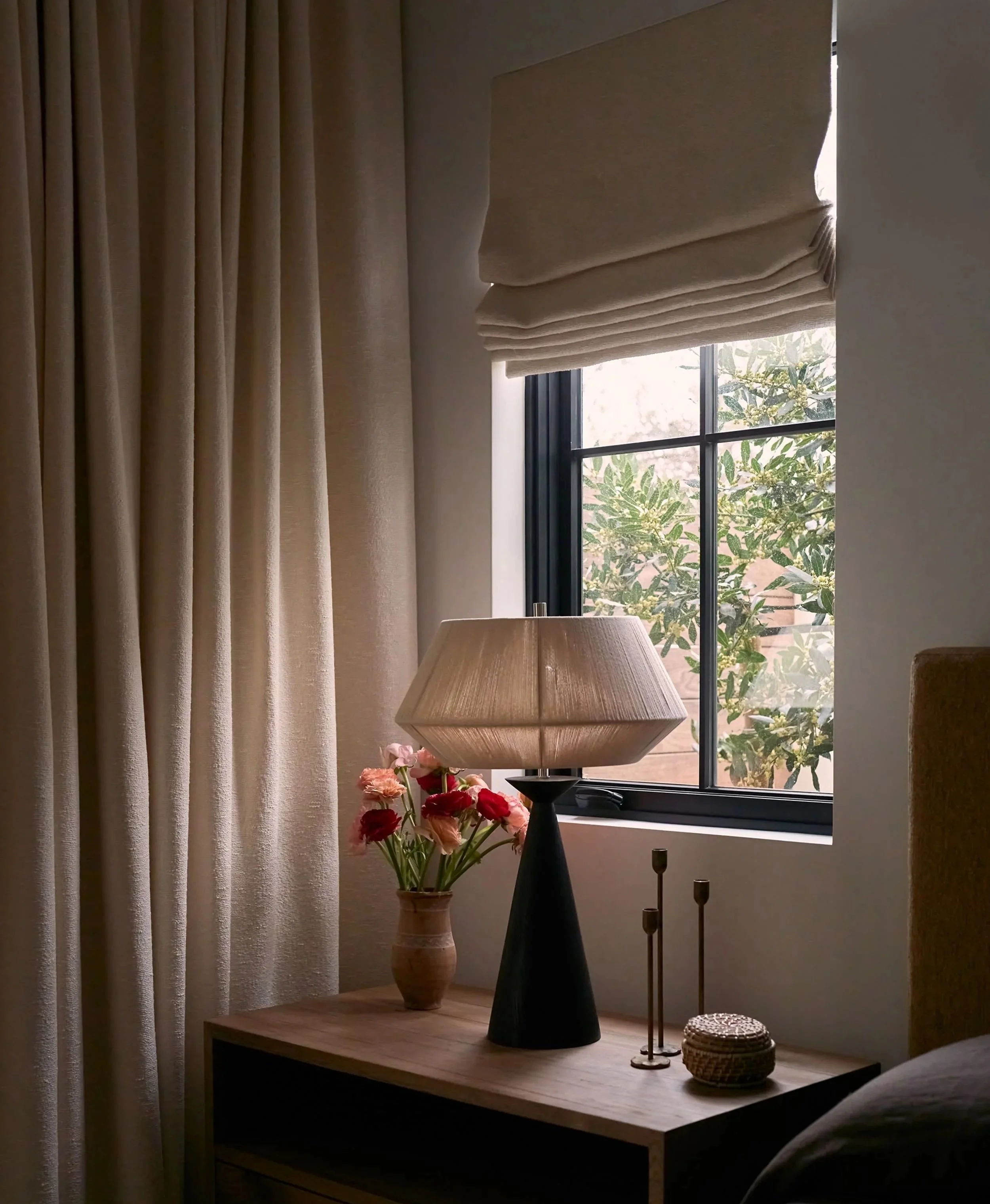
When you are shopping for shades, you will hear two terms come up constantly: blackout and light filtering. They sound like opposites, and they are. But understanding the real difference matters, because choosing the wrong one for a room wastes money and creates frustration.
Let's break down what each actually does, where each works best, and how to pick the right one for your space.
What Are Light Filtering Shades?
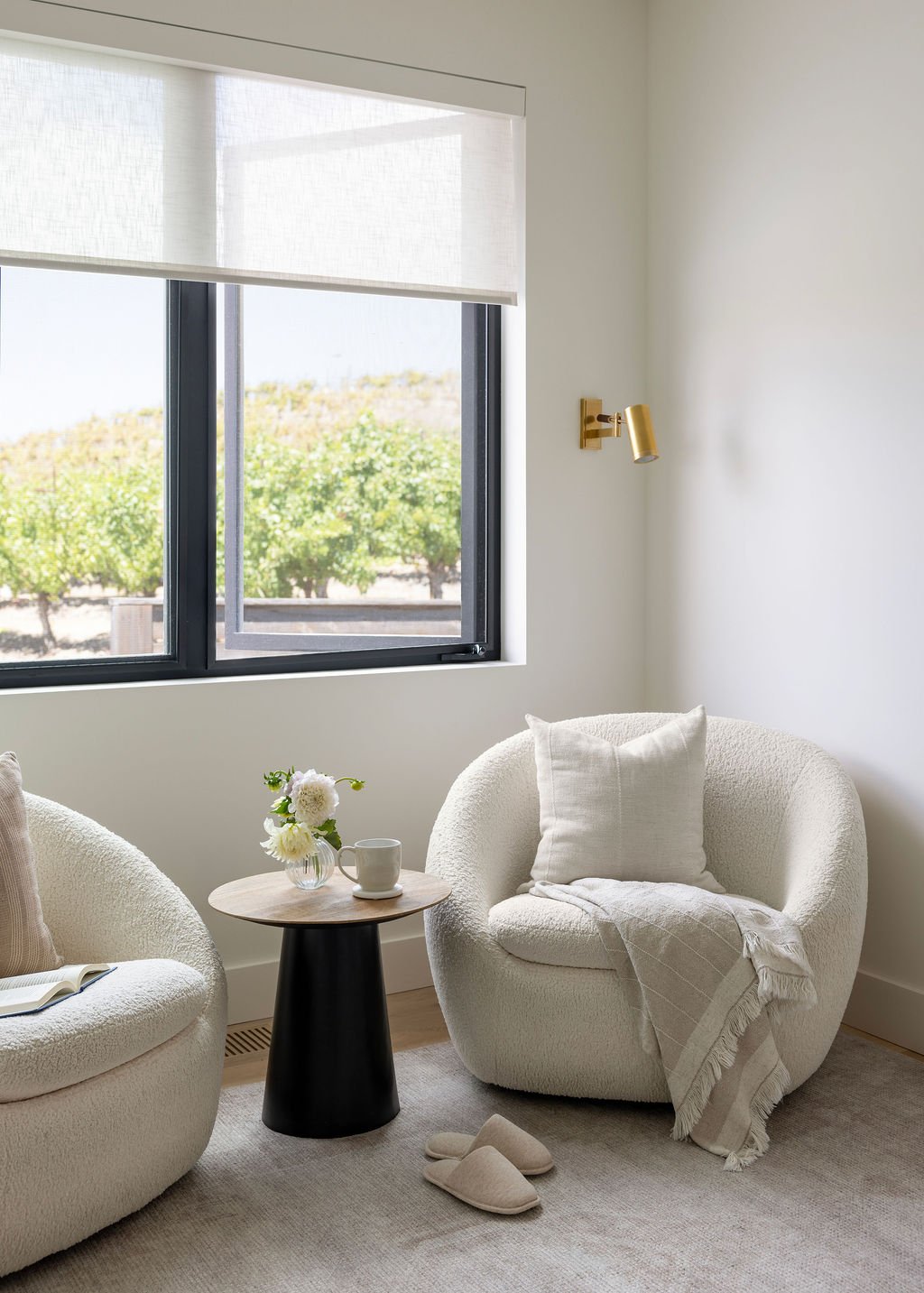
Light filtering shades do exactly what the name says: they filter light, not block it. They let some light through while reducing glare and providing some privacy.
When you look out from inside, you can usually see outside fairly clearly. When someone looks in from outside, the view is diffused or softened, but a silhouette might still be visible depending on the shade opacity and time of day.
Light filtering shades come in varying degrees of opacity. A sheer light filtering shade lets in more light and offers less privacy. A semi-opaque light filtering shade lets in less light and offers more privacy, but still is not blackout.
Best for:
Living rooms and family rooms where you want natural light during the day
Spaces where you want brightness without glare
Rooms where privacy from a distance is fine, but you do not need complete darkness
Wine country homes where you want to maintain views while managing afternoon sun
Offices or creative spaces where you want ambient light
Light Filtering Options We Offer:
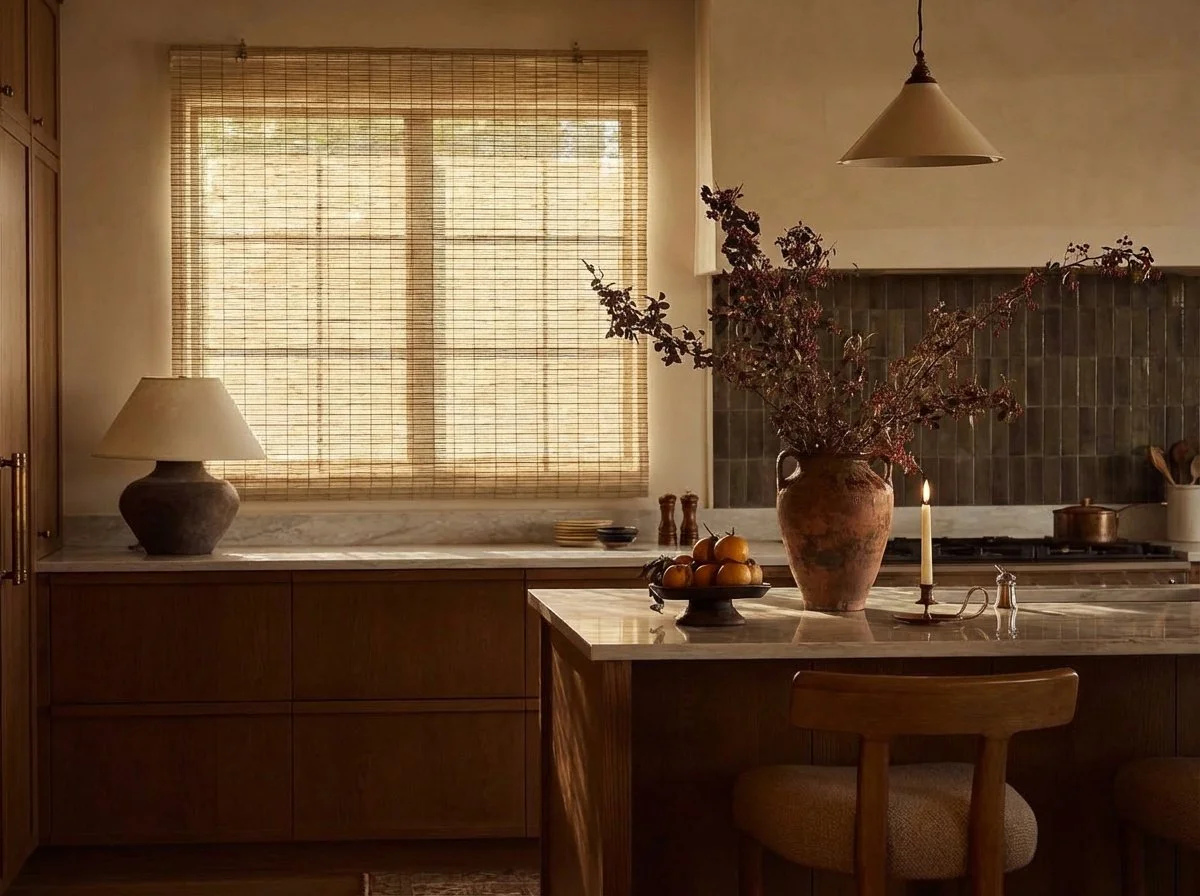
Sheer shades are our most popular light filtering choice, offering softness and privacy without darkness. Woven wood shades provide natural texture while filtering light beautifully. Roman shades can be fabricated in light-filtering fabrics for a tailored, elegant look. Cellular shades come in semi-opaque options that filter light while providing some insulation.
What Are Blackout Shades?
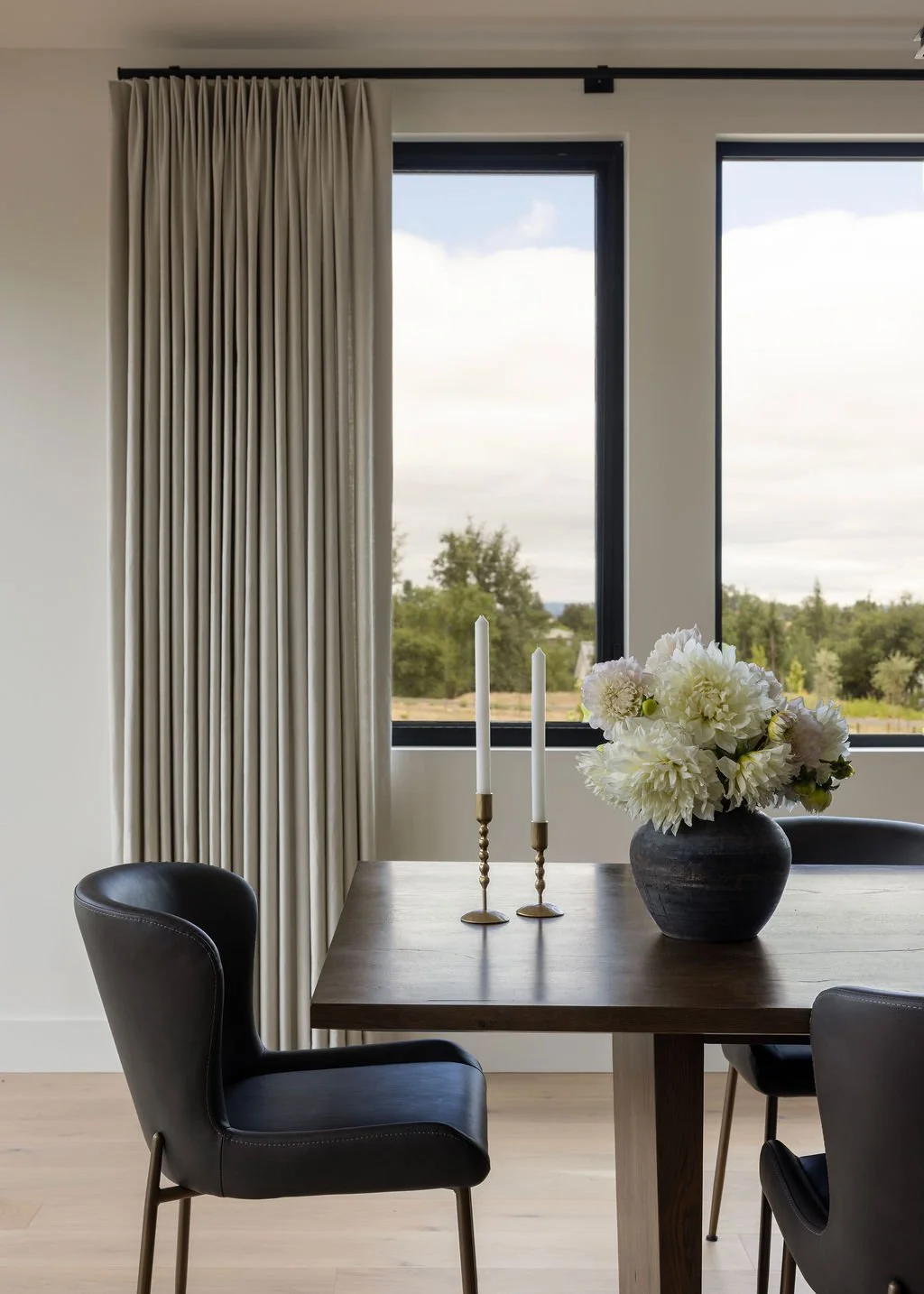
Blackout shades block nearly all light. When closed, they create a dark room even in the middle of the day. They also provide complete privacy. No one can see in or out.
Blackout shades are constructed with thicker, more densely woven fabric or a special backing that absorbs and blocks light completely. The construction is heavier and more substantial than light filtering options.
Best for:
- Bedrooms (especially primary bedrooms where sleep quality matters)
- Nurseries and children's rooms (for nap times)
- Home theaters or media rooms
- Spaces where you need complete darkness
- Shift workers who sleep during the day
- Temperature control (blackout shades provide extra insulation)
Blackout Options We Offer:
Cellular honeycomb shades with blackout backing are one of the best blackout options, combining light blocking with excellent insulation. Custom drapery in heavy, opaque fabrics provides complete darkness plus luxury aesthetic. Roman shades can be fabricated in blackout materials for a tailored look in bedrooms. Roller shades with blackout backing offer a clean, modern appearance with maximum light control.
The Real Difference in Performance
Light filtering shades typically block about 40-60% of light and heat, depending on the fabric.
Blackout shades block 95% or more of light and provide significantly more insulation, which can actually reduce heating and cooling costs.
For privacy, light filtering offers moderate privacy during the day and partial privacy at night (depending on interior lighting). Blackout offers complete privacy 24/7.
Cost Difference
Blackout shades typically cost more than light filtering options because of the construction and materials required. But the price difference is not as dramatic as you might expect, especially if you are buying custom options.
At LC Window Treatments, a custom light filtering shade might run $400-$800 depending on size. A blackout version of the same shade might run $500-$900. The difference is real but manageable, especially when considering the insulation and privacy benefits.
Which Should You Choose?
Ask yourself these questions:
Do you need darkness or just light control?
If you want the room to be dark when you want it, but light and airy most of the time, light filtering is right. If you need it dark whenever the shade is closed, go blackout.
What room is this for?
Bedrooms almost always benefit from blackout. Living rooms and dining areas usually work better with light filtering. Bathrooms can go either way depending on privacy needs and natural light preference.
Is privacy your main concern?
If yes, blackout gives you absolute privacy. If you just want to reduce visibility from the street or a close neighbor, light filtering often does the job.
Do you have views you want to preserve?
Light filtering lets you see out and enjoy your view while maintaining privacy. If you have wine country views you love, light filtering is the better choice for main living areas.
How much natural light do you want?
This is the real question. Be honest about how you use the space. If you work from home and want daylight, light filtering. If you need to block light for sleep or temperature control, blackout.
A Common Solution: Use Both
Many homeowners and designers layer both. Use a blackout shade for function (temperature control, complete darkness when needed), then add a sheer or light filtering top treatment for daytime aesthetics and light control.
This gives you flexibility. Close the blackout shade at night for sleep and privacy. During the day, raise it and rely on the light filtering layer for softness and glare reduction.
For wine country homes especially, this approach works beautifully. You get the views and light during the day, complete privacy and darkness at night.
The Bottom Line
Light filtering and blackout shades solve different problems. Light filtering is about control and softness. Blackout is about complete darkness and privacy.
The right choice depends on what you actually need from the space. If you are torn, remember that you can always layer both and get the best of both worlds.
At LC Window Treatments, we offer a full range of both light filtering and blackout options. Sheer shades, woven wood shades, and roman shades work beautifully for light filtering. Cellular shades with blackout backing, roller shades, and custom drapery deliver complete darkness when you need it. We work with you to understand how you use each room and recommend the right solution for your needs. Some rooms will be blackout. Others will be light filtering. Many wine country homes use both.
Schedule a complimentary design consultation with our team.
We'll review your home, talk through how you use each room, and recommend solutions tailored to your lifestyle and budget