
Solar Shades For Summer Heat Control In Wine Country Homes
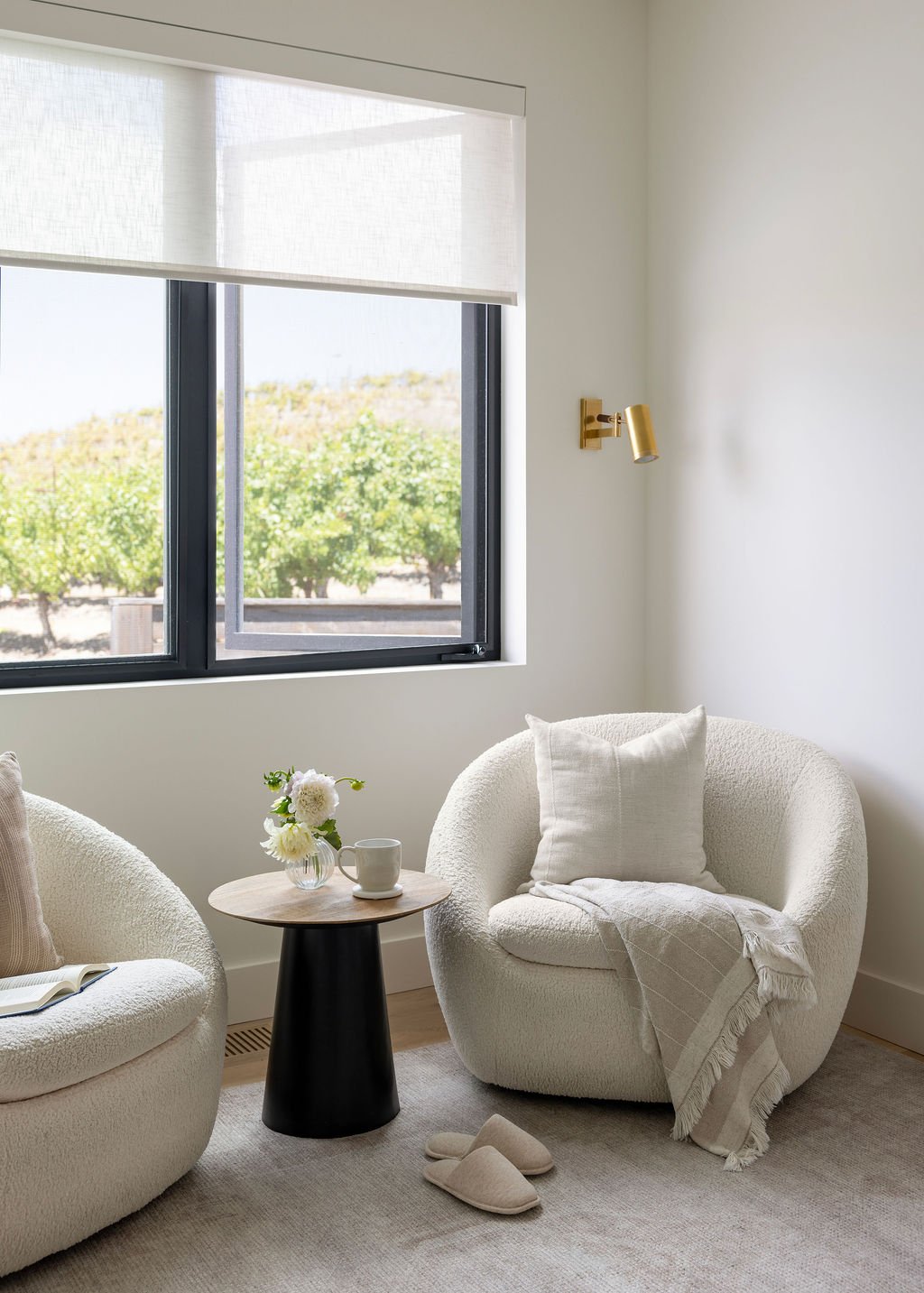
As temperatures climb into the 90s and beyond, your cooling costs soar.
Your furnishings, art, and flooring start fading from UV exposure. Your home becomes a greenhouse instead of a refuge.If you have large windows, and most wine country homes do, this is your season to invest in solar shades. Solar shades are specifically designed to block heat and harmful UV rays while maintaining visibility. They're not just a comfort upgrade; they're a strategy for protecting your home and reducing energy costs during peak summer months.
What Makes Solar Shades Different
Solar shades look like roller shades but function like professional-grade heat blockers. They use specially engineered fabrics woven to reflect and absorb solar heat before it enters your home.
Unlike blackout shades that block all light (and are usually ugly), solar shades let you see out while stopping the heat from coming in. You get light without the greenhouse effect.
How they work:
The fabric is typically a tight weave of polyester or vinyl-coated polyester with small openings that create a semi-opaque effect. When sunlight hits the shade, the weave structure reflects solar energy back out through the window instead of letting it transfer into your home. UV rays are blocked or significantly reduced before they reach your furnishings.
The result? Light still enters your space (so it doesn't feel dark or cave-like), but heat and harmful UV are kept outside where they belong.
The Energy Savings Are Real
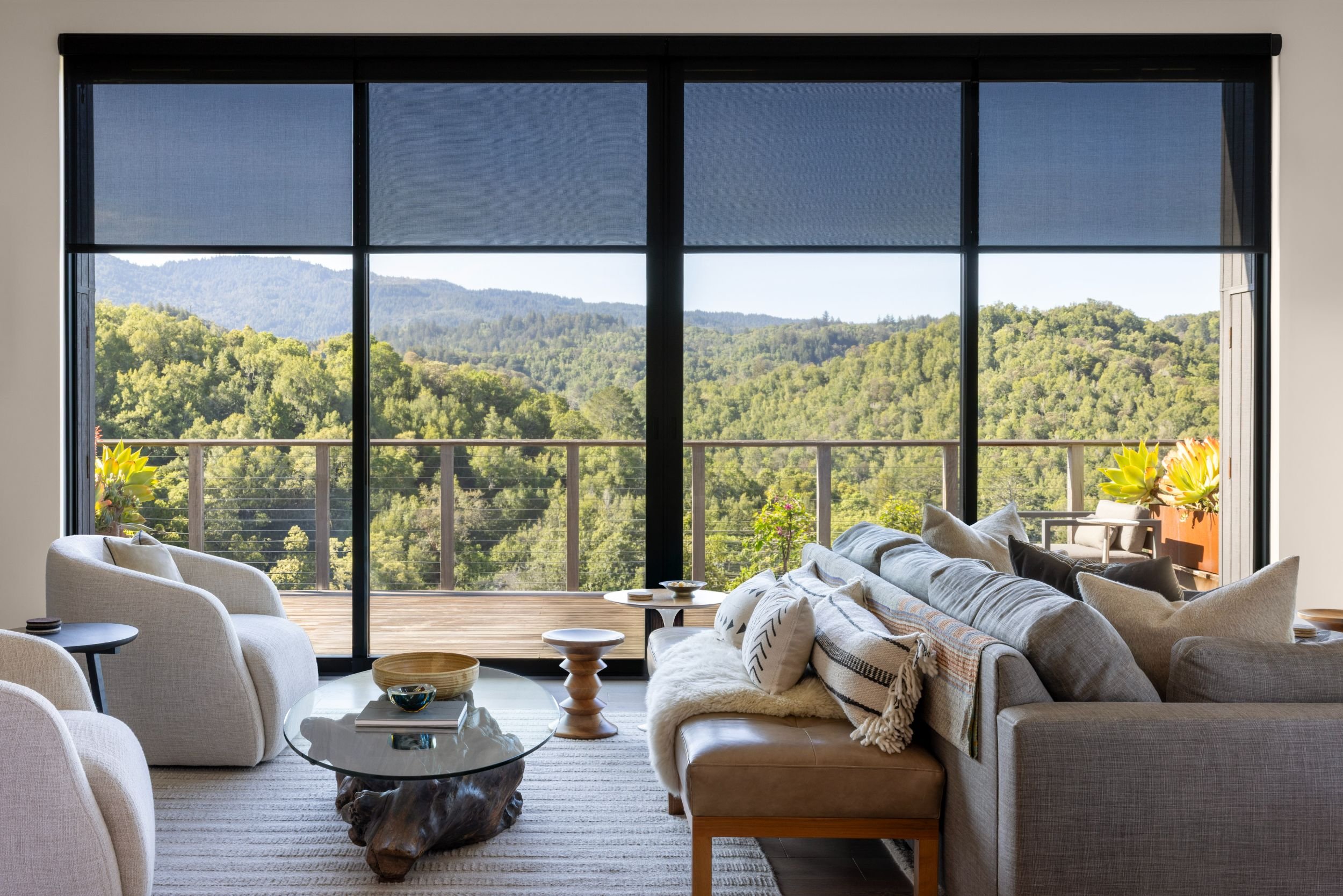
This isn't marketing hype. Multiple studies show that solar shades reduce heat gain by 40 to 80 percent depending on the shade type and fabric opacity.
For wine country homeowners, this translates to measurable savings on cooling costs during the hottest months. If you're running air conditioning to combat afternoon heat gain through large windows, solar shades can significantly reduce the workload.
A typical scenario:
A large south or west-facing window can contribute 10 to 20 degrees of heat gain on a 95-degree day. Install solar shades on that window, and you've reduced the problem by half or more.
Over a summer season, especially in homes with extensive glazing (which is nearly every wine country property), the cooling cost savings often recoup the investment in solar shades within a year or two.
Plus, there's an added benefit most people don't realize.
Protecting What Matters Most
Wine country homes often contain valuable furnishings, art, wine collections, and architectural elements worth protecting.
UV damage is cumulative and permanent. Exposure fades fabrics, bleaches wood floors, damages artwork, and degrades leather over time. You can't reverse it, only prevent it.
This is especially important if you're storing wine at home or have wine displays visible through windows. UV exposure affects wine quality and label integrity.
Solar shades are essentially insurance. They block up to 95 percent of harmful UV rays, keeping your home and its contents protected without sacrificing views or natural light.
For homeowners who've invested in quality furnishings, art, or architectural finishes, solar shades are an affordable protection strategy.
Manual vs. Motorized Solar Shades
You can get solar shades in either manual or motorized versions.
Manual solar shades cost less upfront and install quickly. You raise and lower them by hand or with a cordless mechanism. If you only need heat control on one or two windows, manual makes sense.
Motorized solar shades let you operate them from your phone, schedule them automatically (close during peak heat hours, open in the morning or evening), and integrate with smart home systems. For wine country homes with many large windows, motorized solar shades solve a real problem: managing heat gain across multiple rooms when you're not home.
Imagine your shades closing automatically at 2 PM when the afternoon heat peaks, then reopening at 7 PM when it's cooler. No manual management, just consistent heat control.
Many of our clients combine both strategies: motorized solar shades in main living areas and hard-to-reach windows, manual versions in secondary spaces.
Solar Shades and Your Home's Aesthetic
A common concern: "Will solar shades make my home feel dark or institutional?"
The answer depends on the shade you choose.
Solar shades come in varying opacity levels:
- Sheer solar shades (5 to 10 percent openness) maintain light and views while blocking significant heat. These look more like sheers and maintain the open feel of your space.
- Semi-opaque solar shades (14 to 20 percent openness) block more heat while still allowing light and some visibility.
- Blackout solar shades (less than 5 percent openness) provide maximum heat and light blocking for bedrooms or media rooms.
For living areas and spaces where you want to maintain views, sheer or semi-opaque solar shades are the right choice. The fabric is nearly invisible when installed, and people often can't tell what's creating the temperature difference until you explain it.
At LC Window Treatments, we work with you to select the right opacity and fabric color (they come in various hues) to match your aesthetic while delivering the heat control you need.
Wine Country Specific Advantages
Wine country homes are built around views. Large windows, sliding glass doors, skylights, and clerestory windows are features, not bugs.
The challenge: all that glass is also an open door for heat and UV damage.
Solar shades solve this elegantly. You maintain the views and natural light that made you fall in love with your home while controlling the downsides (heat, fading, glare).
For homes in Sonoma, Napa, and Marin with south or west-facing exposures, which is most of wine country, solar shades are a strategic investment.
They're also particularly valuable for:
- Homes with skylights (motorized solar shades on skylights save enormous cooling costs)
- Wine storage displays or wine cellars (UV protection is essential)
- Large living areas with extensive glazing
- Homes overlooking vineyards where privacy might be less of a concern than heat control
Installation and Maintenance
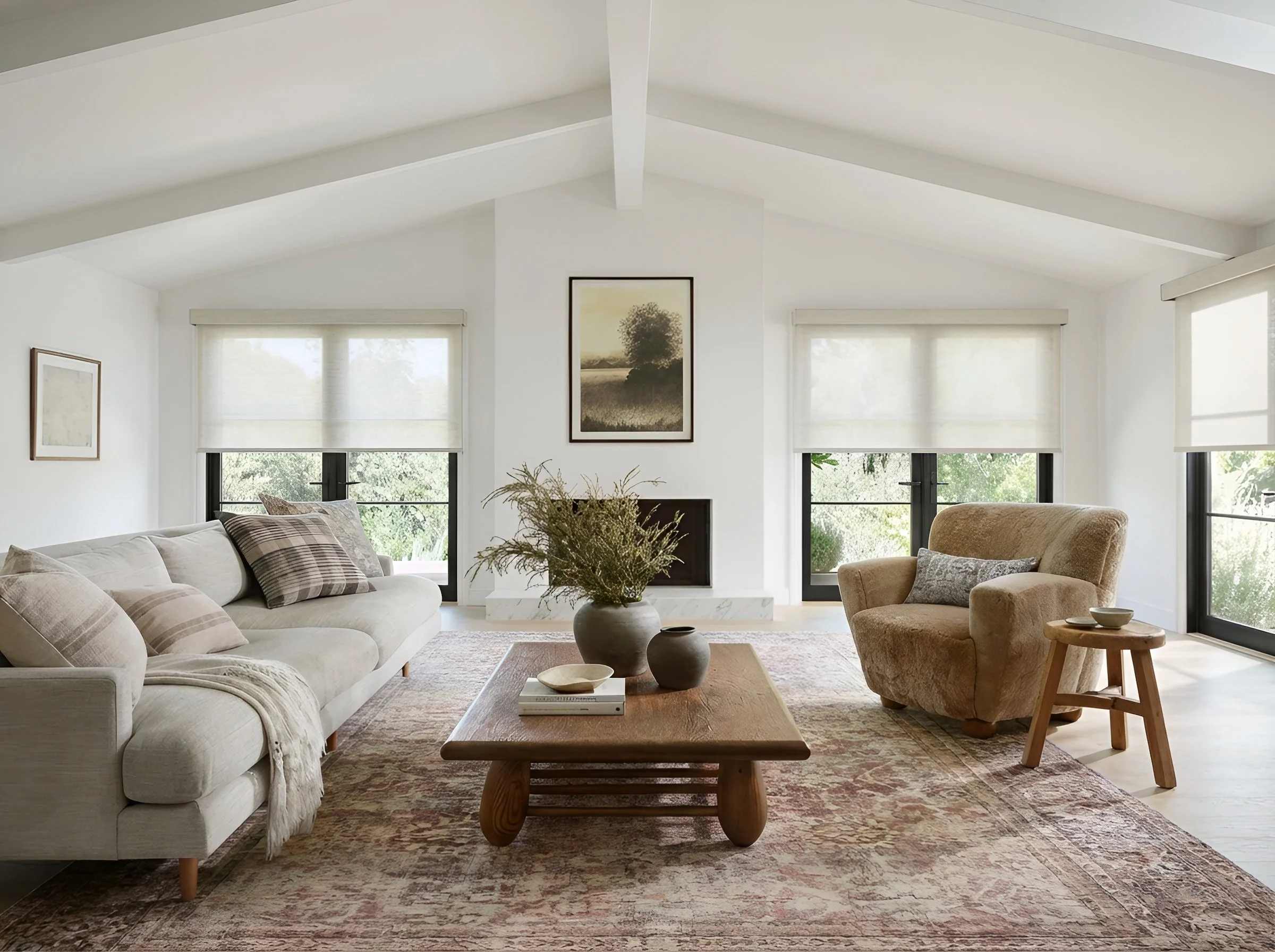
Solar shades install like standard roller shades. The process typically takes a single visit.
For motorized systems, installation includes motor calibration and, if you're hardwiring them, coordination with an electrician.
Maintenance is minimal. Occasional vacuuming or dusting to keep the fabric clean. Battery-operated motorized shades need battery replacement every few years. Hardwired systems have no battery concerns.
They're remarkably durable. Quality solar shade fabrics last 10 to 15 years with normal use and maintenance.
Getting Started with Solar Shades
If you're running your air conditioning on overtime or noticing fading on furnishings in sun-exposed rooms, solar shades are worth exploring.
The best approach is to start with your most problematic windows, typically large south or west-facing glass, and expand from there as budget allows.
We offer complimentary design consultations to review your home, identify which windows contribute most to heat gain, and recommend solar shade solutions tailored to your space and aesthetic.
We'll discuss manual vs. motorized options, explain the opacity choices, and walk through costs and installation timeline.
Schedule a complimentary design consultation with our team. We'll help you find the right solution for your wine country home.
At LC Window Treatments, we specialize in custom solar shades, motorized window treatments, and energy-efficient solutions for homeowners throughout Sonoma, Napa, and Marin. Whether you're looking to reduce summer heat gain, protect furnishings from UV damage, or integrate window treatments with your smart home, we bring expertise and attention to detail from consultation through installation.