
Drapery Styles Explained: Pleats, Headings, and Lengths
Drapery Styles Explained: Pleats, Headings, and Lengths
Drapery changes a room more than almost any other window treatment. The same fabric can look relaxed, tailored, or formal depending on how the panel is finished at the top, how full it is, and how long it hangs. If you are planning custom drapery, these choices shape the look.
Not sure whether you want curtains or drapes? Start with our guide to curtains vs. drapes, then come back here.
The Five Choices That Define a Drapery Style
Every drapery panel comes down to five decisions: the heading (how the top is finished), the fullness, the length, the lining, and the hardware. Here is how each one works.
Heading Styles
The heading is the top of the panel, and it sets the character of the whole piece.
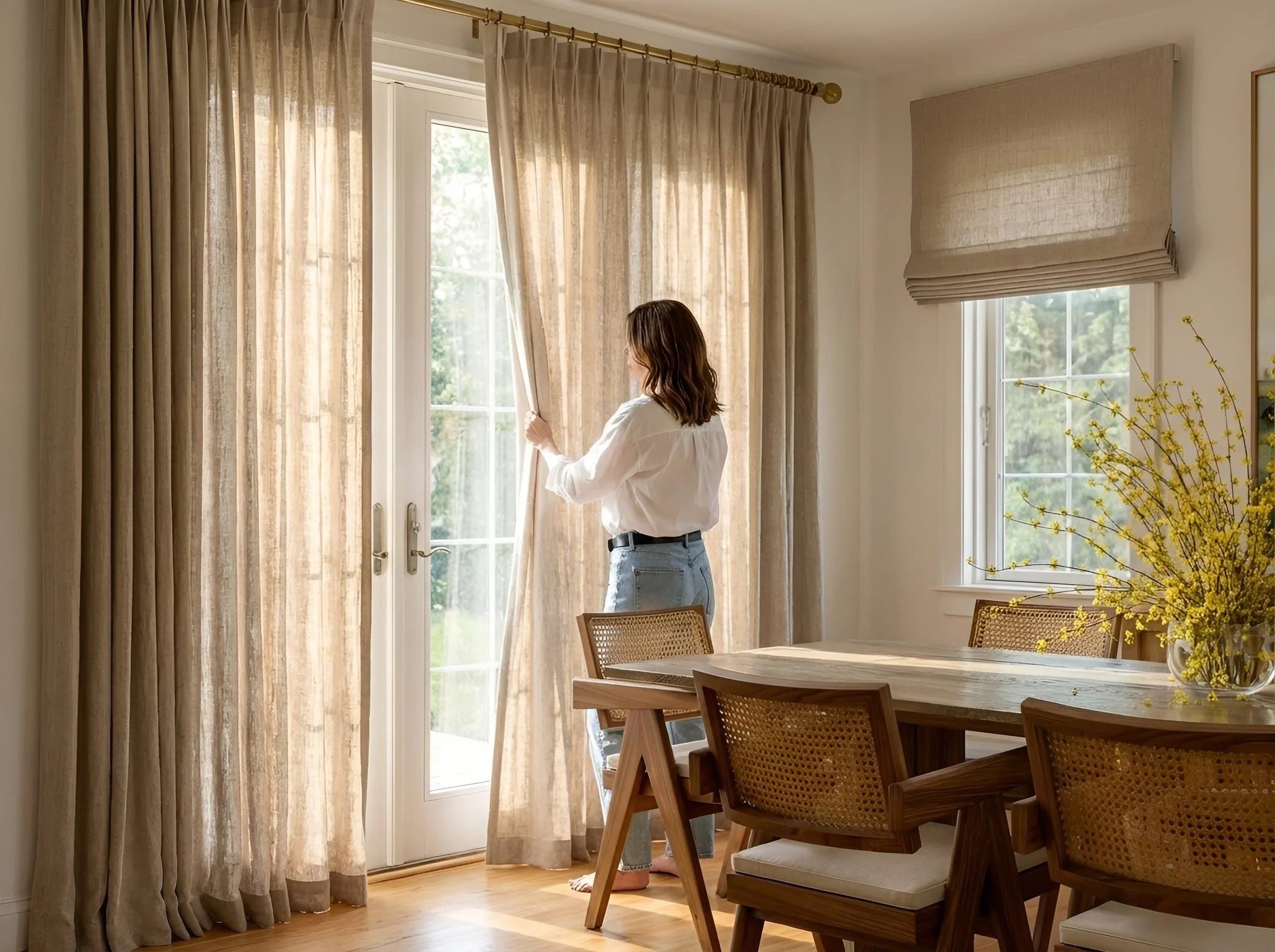
Pinch pleat. Fabric is gathered into evenly spaced, tailored pleats at the top. It is a classic, polished look that holds its shape well and suits formal living and dining rooms.
Goblet pleat. Each pleat is shaped like a small goblet. It is more dramatic and traditional, and works best in rooms with higher ceilings and a formal feel.
Box and inverted pleat. Crisp, flat folds create a structured, tailored look. It is a good choice for clean, transitional interiors.
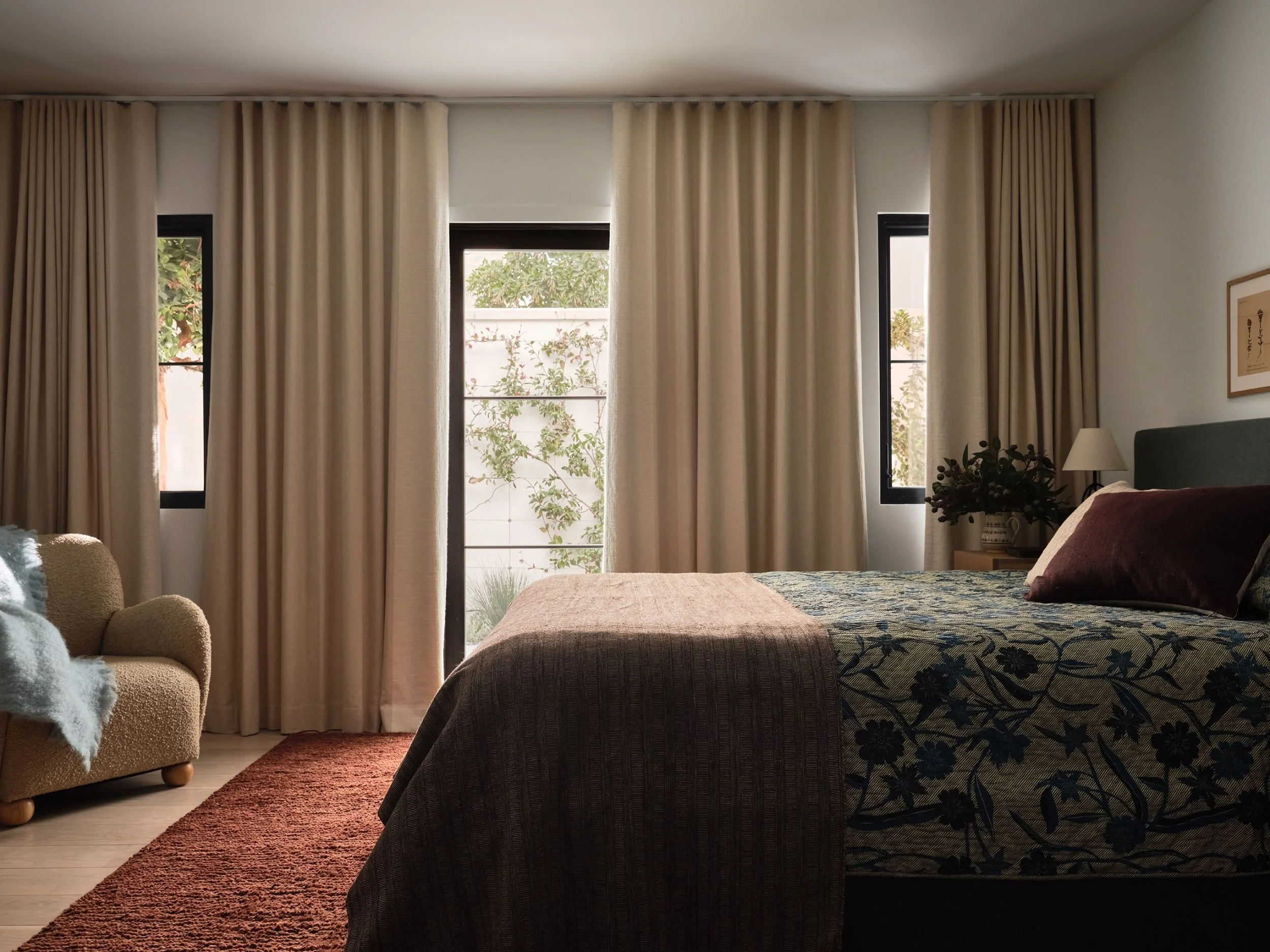
Ripplefold. Soft, even waves that run along a track. It looks modern and relaxed, and it is a natural fit for wide windows, sliding doors, and motorized drapery.
Grommet. Metal rings at the top slide onto a rod, creating wide, even folds. It is casual and contemporary, though the panels glide less smoothly than on a track.
Rod pocket and tab top. The fabric slides or loops directly over a rod for a soft, casual look. These are best for panels that stay in place rather than open and close every day.
Fullness
Fullness is how much extra fabric each panel has. A fuller panel hangs in deeper, richer folds, while a flatter one looks sleeker. Pleated drapery is usually made noticeably wider than the window so the folds can form, and skimping on fabric is one of the most common reasons drapery looks thin. We'll recommend the right fullness and heading for your fabric at your consultation.
Length
Floor length, just clearing the floor. Clean and tailored, and the easiest to live with.
Floor length, just touching. A fuller, more finished look that works well with heavier fabrics.
Puddled. The fabric pools on the floor for a formal, romantic effect. It takes more care and is best in low-traffic rooms.
Sill or apron length. Shorter panels for windows with furniture, a radiator, or a counter below.
Mount the rod or track higher than the window frame, and wide enough that the panels clear the glass when open, to make the window and ceiling look taller and let in more light.
Lining
Lining affects how drapery hangs, how it blocks light, and how long it lasts.
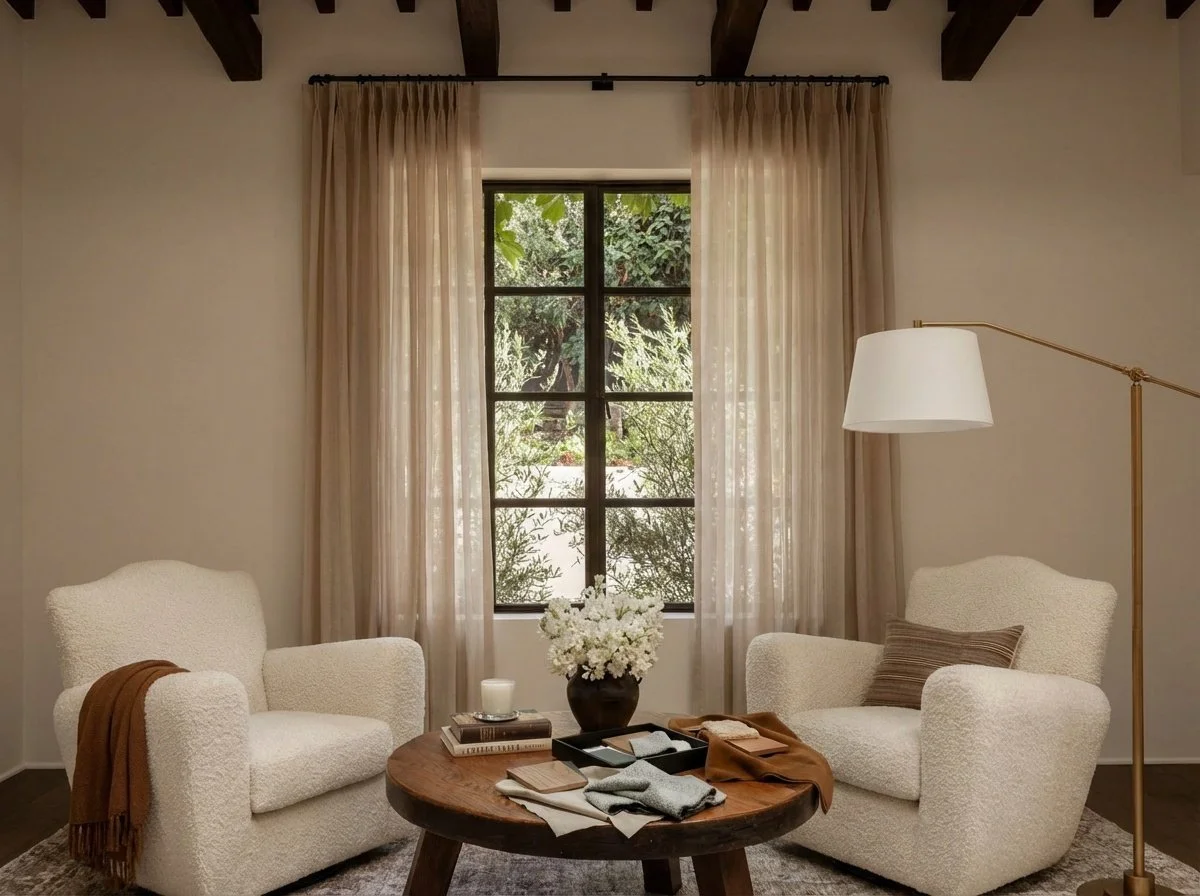
Unlined panels are light and airy and let daylight glow through.
Lined panels hang better, look fuller, and protect the face fabric from sun.
Blackout lining blocks nearly all light, which is a good fit for bedrooms. Our guide to blackout vs. light filtering shades explains the difference.
Interlined panels add an extra layer between the lining and the fabric for a fuller look and added insulation.
Drapery and Winter Warmth
As the weather cools, drapery does more than decorate. Lined and interlined panels that hang full and close to the floor help cut drafts and slow heat loss through the glass. Pairing drapery with a cellular shade behind it adds another layer of insulation, and it is a good time of year to plan new drapery before the holidays.
Hardware
Decorative rods suit panels that open and close by hand, and they are part of the look. Tracks are more discreet, glide smoothly across wide openings, and are the usual choice for ripplefold. For tall windows or hard-to-reach openings, motorized drapery opens and closes with a remote, wall switch, or phone.
Choosing by Room
Living and dining rooms: pinch pleat, goblet, or box pleat in a lined fabric for a finished, formal look.
Bedrooms: blackout-lined panels, often layered over a shade for light control.
Sliding doors and wide windows: ripplefold or pinch pleat on a track, so the drapery opens and closes like the door.
Casual rooms and kitchens: grommet or rod pocket in a lighter fabric.
Drapery also pairs well with other treatments. See our guide to layering blinds and shades on the same window for ideas.
Getting It Right
The best way to choose is to see the fabric and the heading together in your own light. Our custom drapery is made to your exact measurements, and we handle the design, fabrication, and installation. If you are in Sonoma County, Napa Valley, or Marin County, schedule a complimentary consultation and we'll help you find the right style for each room.
Schedule a complimentary design consultation with our team. We'll evaluate your home, recommend efficient window treatments tailored to your space and budget, and discuss installation timing.
At LC Window Treatments, we specialize in custom window treatments for every season. From seasonal fabric updates to complete treatment replacement, we work with homeowners and designers to create spaces that feel fresh, beautiful, and perfectly suited to the time of year. Whether you're planning a fall refresh or preparing your home for holiday entertaining, let's talk about updating your windows.