
Curtains vs. Drapes: What's the Difference?
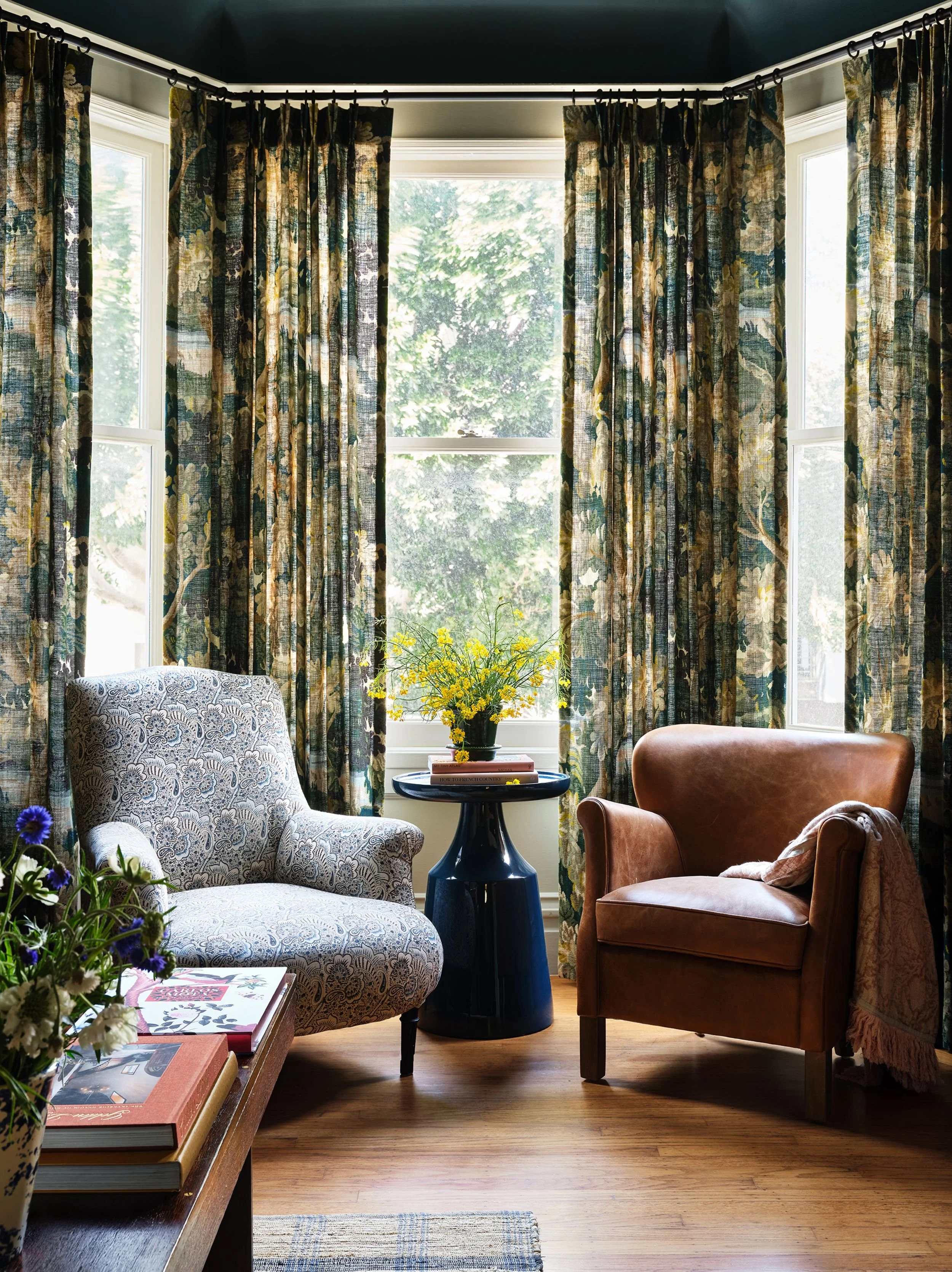
Curtains and drapes get used as interchangeable terms constantly, and honestly, most people aren't wrong to do it casually. But if you're actually choosing window treatments for your home, the distinction matters more than you'd think. The two serve genuinely different purposes, and knowing which one fits a given room can save you from an expensive reselection down the line.
Here's the real difference, and how to decide which one belongs in your home.
Fabric Is the Starting Point
Curtains are typically made from lighter materials, cotton, linen, polyester, or sheer fabrics. They're often unlined, which means they filter light rather than block it, and they tend to have a more relaxed, casual presence in a room.
Drapes are made from heavier fabrics, think velvet, faux silk, or richer woven textiles, and they're almost always lined. That lining gives custom drapery its formal, substantial look, and it also gives drapes real functional power when it comes to blocking light and adding insulation.
Length and Formality
Curtains come in a wide range of lengths. Some sit right at the windowsill, others fall to the floor, and shorter styles are common in kitchens, breakfast nooks, or casual spaces where a heavier, floor-length treatment would feel out of place.
Drapes are almost always long, extending to the floor or even slightly beyond in what's called a puddle length. That extra length, combined with the heavier fabric, is a big part of why drapes read as more formal. They're the window treatment you'll see in a dining room, a primary bedroom, or a great room where the goal is a polished, finished look.
Function, Not Just Looks
This is where the distinction actually matters for how a room performs.
Drapes, thanks to their weight and lining, provide meaningfully better light blocking and privacy than most curtains. They also add real insulation, which can help even out a room's temperature, particularly valuable in wine country homes with large windows facing intense afternoon sun. A well-lined drape panel does more than dress a window. It's doing real work.
Curtains, by contrast, are built for a lighter touch. They soften a space, let in filtered natural light, and add color or pattern without fully closing off a room. They're also a great layering piece, especially paired with a functional Roman shade underneath for when you need more complete coverage or privacy.
Drapes can also be motorized for large windows or hard-to-reach spaces, which is worth considering if you're drawn to the formal look of drapery but don't want to manage heavy panels by hand every day. Pairing motorized drapery with a scheduled shade underneath gives you full control over light and privacy without lifting a finger.
How They're Often Used Together
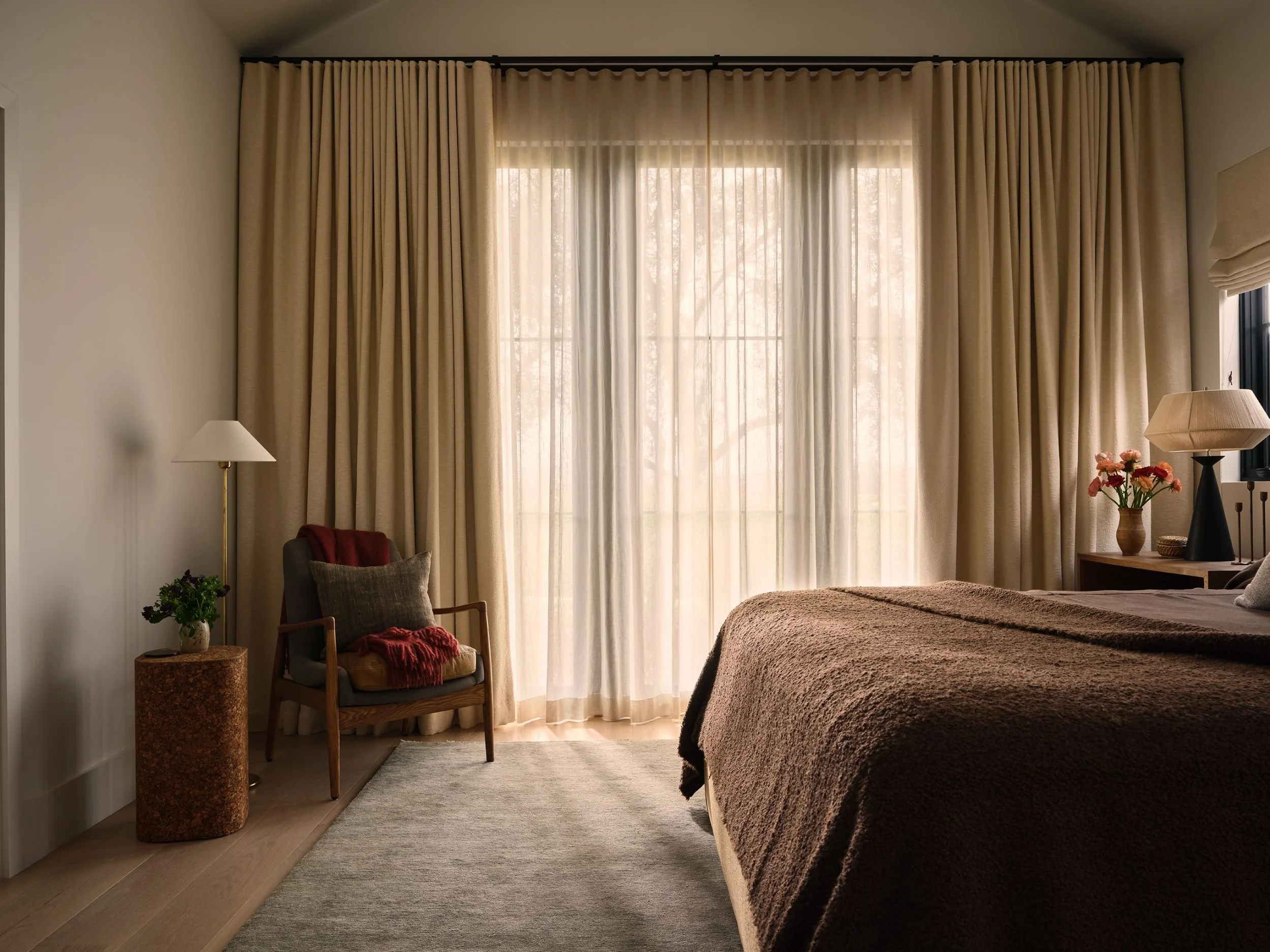
One of the most classic combinations in interior design is a sheer curtain layered with a heavier drape on either side. During the day, the sheer filters light and offers a soft daytime privacy. In the evening, closing the drape provides full coverage, insulation, and a more dramatic look. This layered approach is especially popular in Napa Valley estate homes, where large windows and vineyard views call for treatments that can flex between showing off the view and creating a cozy, closed-in feel at night.
Choosing Between Them
If you want a formal, finished look with real functional light control and insulation, particularly in a primary bedroom, dining room, or any space with large windows facing strong sun, drapes are usually the better investment.
If you're looking for something lighter, more casual, and more budget-friendly, or if the room already has a functional shade or blind doing the heavy lifting on light control, curtains might be all you need.
Many homeowners use both throughout the same home: drapes in more formal or light-sensitive rooms, and curtains in kitchens, home offices, and casual living spaces.
Getting It Right for Your Space
Fabric choice, lining, length, and hardware all affect how a curtain or drape performs and looks in a specific room, and getting these details right is where the real difference between a good result and a great one comes from. If you're not sure which direction fits your home, a design consultation is the easiest way to see fabric options in person and get guidance specific to your windows and your light.
Schedule a complimentary consultation, and we'll help you figure out exactly what your space needs.
At LC Window Treatments, we specialize in custom window treatments for every season. From seasonal fabric updates to complete treatment replacement, we work with homeowners and designers to create spaces that feel fresh, beautiful, and perfectly suited to the time of year. Whether you're planning a home refresh or preparing your home for the changing seasons, let's talk about updating your windows.